


Thing 5: Reflective Practice

Following behind schedule on CPD23, I'm interested in the implications of reflective practice for library students and those not yet professionally engaged.
I can imagine that the primary obstacle for reflective practice in a professional capacity is time; you have other competing demands and priorities on the job that make carving out a space for RP a daunting challenge.
On the other side of the spectrum, there are students and part-time workers, who may be more time-wealthy but may lack the professional projects - grist for the mill, I guess - that one usually reflects on.
I understand that this isn't a valid barrier to reflective practice, at least in the way I've understood it. You can reflect on many levels on various projects - anything from a school project to a reference interaction to your overall academic library career. So, in working on this Thing 5, I've been pondering my career path thus far: what I've done, how that has turned out, and where I'm planning to go from here.
The main result = uncertainty. I'm not unsure about my interests; health sciences librarianship engages my interests and skills fully, and I love being part of such a dynamic atmosphere at my library. I've had the opportunity to contribute to projects that have helped the library overall; working on the 'front lines' has shown me the importance of soliciting feedback from everyone on the staff - people at the Circ Desk get to see a lot that you may not.
However, in terms of professional growth...I know this is a harsh job market. I know that everyone is struggling. And I'm trying to keep my motivation and abilities sharp in an atmosphere that is often discouraging.
Some days are better than others.
CPD23 has been part of my efforts to keep this freshness in my library life, along with staying informed in career trends and skills. And it has certainly helped me to find new avenues - blogs, professionals, and projects to engage with. But as you can see, I am only on Thing 5 here. So I need to increase my own participation, set out the time and muster the motivation to sit and get it done.
That's my reflection, for now at least. We'll see what happens next.
0
comments
 Labels:
cpd23,
librarianship,
professional development
Labels:
cpd23,
librarianship,
professional development
Labels:
cpd23,
librarianship,
professional development
Getting to Know You: Librarian-Faculty Collaborations

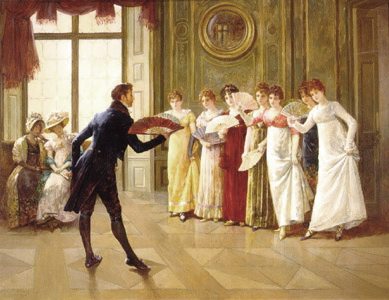
The King and I screenshot from tvtropes.org
In the Library with the Lead Pipe has two fantastic posts on librarian-faculty collaboration, a topic of particular interest in our field. Part I talks about why it's important for librarians to shake off the academia inferiority complex and how to go about making connections at the faculty level, and Part II provides more specific examples of projects and approaches at various levels of collaboration.
This means going beyond the one-shot research session or supporting a particular assignment and moving into actively partnering with your faculty members to shape the curriculum - which involves aligning goals and making adjustments on both sides. I'm glad that someone has acknowledged this point: when librarians and faculty work together, we each have to adjust our working styles and goals. Even though we are (hopefully) equals, we do work in different contexts on campus and in our professions.
What I found most refreshing about this two-part feature was its emphasis on the human element. Building relationships is at the heart of librarian-faculty collaboration, and that means connecting on a personal as well as a professional level.
I also loved the emphasis on specific strategies - a battle plan, if you will - that goes beyond attending departmental meetings and sending out email bulletins (which are likely deleted as soon as received). After all, the first question you need to answer when approaching someone on campus is, 'Why would I want to work with you?' In other words, 'Why should I care?'
Building these relationships is intensive in every way - it requires time, personal effort, and an ongoing commitment. But as the posts illustrate, the rewards are worth the effort; rich scholarly projects at the faculty level and a dynamic curriculum that cohesively addresses students' needs in their programs are the fruits of successful librarian-faculty collaborations.
Thing 4 Update: Pushnote

When I heard that this tool was endorsed by Stephen Fry (who openly disclosed that he has shares in this venture), I was inclined to be an instant fan. Because, after all, it's Stephen Fry.
I agree that the concept is intriguing as a method of ensuring transparency and adding a level of interactivity to websites -- the websites themselves have no control over who gets to comment, and this is another avenue for learning about relevant and interesting sites by following your friends' interests.
Having signed up and installed the application, however, I found the experience lacking. It may have been that I haven't reached the critical mass of friends, or I'm not looking at the 'right' sites, but I wasn't finding a lot of original, engaging discussion out there.
I do think this could be a great tool within established communities (hence the interlinking with Twitter), and therefore could also be an interesting classroom tool. Just as one of the professors I know uses Diigo to encourage students to critique and discuss certain web sources, Pushnote could be another avenue for critical discussion -- particularly on websites that don't invite this kind of engagement already through comments, etc.
Have you had a different Pushnote experience? Have you seen it employed professionally or in the classroom? Let me know!
0
comments
Labels:
cpd23,
Pushnote,
technology
Labels:
cpd23,
Pushnote,
technology
Thing 4: Doin' the Social Thing(s)
I've been a bit behind in the midst of job interviews and family visits (note to self: not a good combination). Thankfully, for this Thing I'm already acquainted with 2 out of 3 of the services: Twitter and RSS.
My first experience with Twitter was at the MLA Annual Conference in Minneapolis, and it added a whole new layer of participation. There were monitors displaying ongoing tweets everywhere, and you could easily get distracted by the Twitter Monitor during a presentation. Sadly, the app I downloaded for my Android phone refused to play nicely with my Twitter account, so I spent more time punching buttons and cursing than actively tweeting.
However, I do have a fun Twitter story to share: I had been following Librarian Lizy's tweets for a good while (she's a solo hospital librarian rife with thrilling tales, and she gives a photo tour of her library here). We'd been trying to connect in the opening madness, to no avail. I was wandering the hotel lobby one evening and spotted two MLA-ers across the way. The Twitter description of a leopard-print scarf floated across my mind, and I took a chance at approaching complete strangers...yup, it was her. ;)
Moral of this story: Find me on Twitter! You can click on the link in the upper right, or search for K4Dag.
I'm working on setting up Pushnote now, but I've just signed up to Diigo and it sounds very similar to this. We'll see what the benefits/differences are...
0
comments
Labels:
cpd23,
social media
Labels:
cpd23,
social media
Thing 3: Branding!

Thing 3 is all about branding, which is something that I definitely need to work on. This has become clear as I peruse the other cpd23 and professional blogs out there who have done a fantastic job of communicating their professional and personal interests and strengths.
As I was looking at my own blog to see what was lacking, I decided to go back to basics and look at the key elements that appeared in other blogs. They were:
- *Consistency
- *Simplicity
- *Accessibility
Consistency
The first point refers not only to timely posting (which I've already fallen behind on), but also an overarching theme that unites your output. This includes everything from writing style to format, and it comes together to present a coherent online 'personality.' This doesn't mean that you can't have variety in your posts -- for example, Deanne's Curb Service covers everything from our professional image (think spectacles and hair buns) to electronic health records (a particular interest of mine as a health sciences librarian), but her posts all share the same core focuses: innovation, education, and access.
It seems that keeping true to your primary interests is a good strategy for maintaining consistency -- there's nothing wrong with a few 'look at this cool thing!' posts, but you're probably going to write more in-depth about the topics that really start your engine.
Simplicity
This point struck me as I looked at the designs featured on other blogs and decided what appealed most to me: clean, simple layouts that showcase your online personality and professional philosophy. This is more than 'just' an aesthetic issue; the right layout can go a long way towards making your posts attractive and accessible (leading into my third point…)
Accessibility
The best blogs I've seen have been visually appealing and easy to navigate, which encourages me not only to read what they've written but also engage with them personally. I also enjoy seeing a listing of other blogs that they're interested in -- so that I get not only a great blog to follow but also a network of other professionals who share my interests. I think this 'portal' function helps your blog to act as a platform for exchange, instead of the one-way 'broadcast' model of previous media.
So far, I'm not doing so well on the 'branding' front, but these points have at least given me a place to start. In terms of simplicity, I've changed my blog theme to something that looks 'cleaner' and more open. I'm planning to rebuild my bloglist, since the last redesign wiped out my widgets. And I'm going to work on how best to convey my key interests: global exchange, collaborative learning, and practical ways to make library services as ubiquitous as the tech platforms we use everyday.
Please let me know your thoughts: what is your approach to branding? What do you see as keys to success? What have you found most challenging about the process?
2
comments
Labels:
branding,
cpd23
Labels:
branding,
cpd23
Thing 2
This has been a challenging one, mostly because I could get lost in the blogosphere for a very long time. I've been impressed and delighted to see so many interesting blogs from global perspectives and diverse professions.
What I hadn't expected was to be learning so much quite this soon -- already, I'm bookmarking furiously about DIY librarianship from InfoGlut and conceptions of professionalism from Undaimonia and tips on writing a questionnaire from Lucy Librarian...
Not to mention meeting people (already!) like Erin at Growth of a Librarian, who was lovely and left my first comment.
I'll have to tear myself away from the computer eventually - this may be a more dangerous project for my Internet addiction than I had anticipated!
What I hadn't expected was to be learning so much quite this soon -- already, I'm bookmarking furiously about DIY librarianship from InfoGlut and conceptions of professionalism from Undaimonia and tips on writing a questionnaire from Lucy Librarian...
Not to mention meeting people (already!) like Erin at Growth of a Librarian, who was lovely and left my first comment.
I'll have to tear myself away from the computer eventually - this may be a more dangerous project for my Internet addiction than I had anticipated!
0
comments
Labels:
cpd23
Labels:
cpd23
Thing 1 (No, Not a Dr. Seuss Reference)
Thing 1 is all about 23 Things, of course, the free online professional development course that one of my amazing former professors sent out.
So for this first Thing, I'm talking a bit about why I'm participating and what I hope to get out of this course. There are a few....um, things.
1) Get More Involved
I love the idea of being a part of an online community where we help each other grow professionally. Having just graduated, I'm shocked by how much I miss that interaction, and I hope this can help to keep 'plugged in.'
2) Try New Stuff
As a newly-minted librarian, I'm eager to get my feet wet, my hands dirty, and any other metaphors you can think of for tackling new tools and projects. I may have already done some of the Things on the list, but I think it's important to keep practicing, to find out what works for me, what doesn't, and how I can improve.
3) Revitalize My Blog
This has sadly fallen by the wayside during my studies, and I'm hoping 23 Things will provide plenty of grist for the mill in terms of my blogging presence. #1 should help too, as I'm slightly cheating and checking out everyone else's awesome blogs before my first post is done.
Those are the big three...hopefully I'll discover more reasons and rewards as I continue through this course!
Please feel free to ping me; I'm happy to talk!
So for this first Thing, I'm talking a bit about why I'm participating and what I hope to get out of this course. There are a few....um, things.
1) Get More Involved
I love the idea of being a part of an online community where we help each other grow professionally. Having just graduated, I'm shocked by how much I miss that interaction, and I hope this can help to keep 'plugged in.'
2) Try New Stuff
As a newly-minted librarian, I'm eager to get my feet wet, my hands dirty, and any other metaphors you can think of for tackling new tools and projects. I may have already done some of the Things on the list, but I think it's important to keep practicing, to find out what works for me, what doesn't, and how I can improve.
3) Revitalize My Blog
This has sadly fallen by the wayside during my studies, and I'm hoping 23 Things will provide plenty of grist for the mill in terms of my blogging presence. #1 should help too, as I'm slightly cheating and checking out everyone else's awesome blogs before my first post is done.
Those are the big three...hopefully I'll discover more reasons and rewards as I continue through this course!
Please feel free to ping me; I'm happy to talk!
3
comments
Labels:
cpd23,
librarianship,
professional development
Labels:
cpd23,
librarianship,
professional development
Subscribe to:
Posts (Atom)

